

Introduction
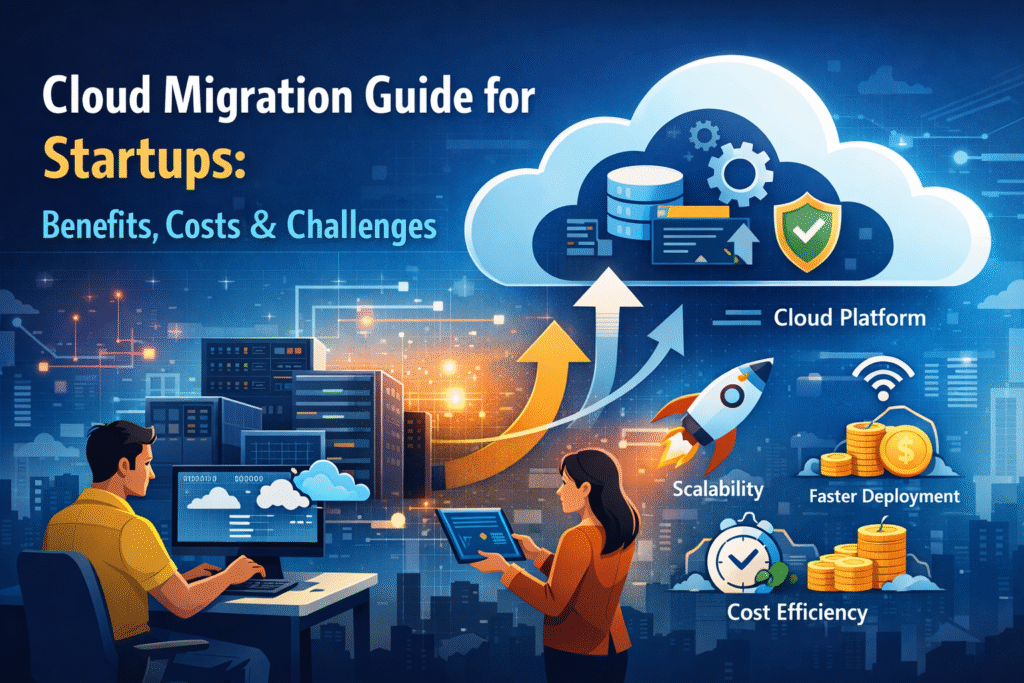
In the rapidly evolving digital landscape, startups must adopt technologies that enable speed, scalability, and cost efficiency. Traditional IT infrastructure often requires heavy upfront investments, ongoing maintenance, and limited flexibility. This is where cloud migration becomes a strategic solution.
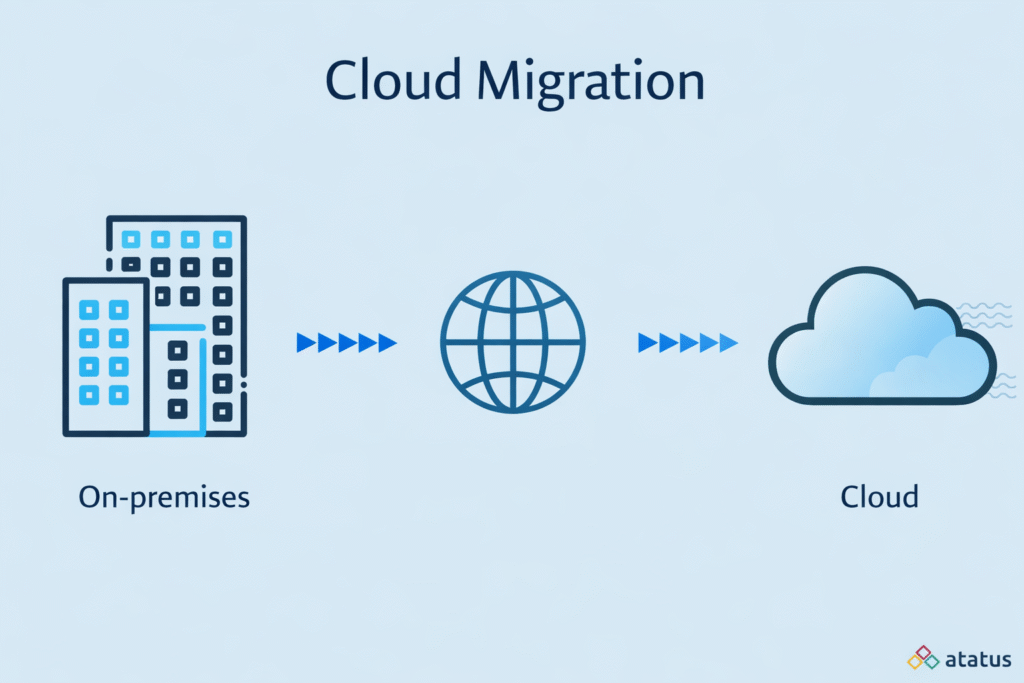
Cloud migration refers to the process of moving applications, data, and IT processes from on-premise infrastructure to cloud platforms such as AWS, Microsoft Azure, or Google Cloud.
For startups aiming to innovate quickly and compete in digital markets, cloud adoption provides a powerful foundation for growth. However, successful migration requires careful planning, understanding of costs, and awareness of potential challenges.
At SarNit Infotech, we help startups and growing businesses transition smoothly to cloud environments, ensuring performance, security, and scalability from the very beginning.
What is Cloud Migration?
Cloud migration involves transferring digital assets such as applications, databases, and workloads from traditional infrastructure to cloud-based platforms. This transition allows organizations to access computing resources through the internet rather than maintaining physical servers.
Cloud migration can take several forms:
Lift and Shift – Moving existing applications directly to the cloud without major changes
Re-platforming – Making minor adjustments to optimize applications for cloud environments
Re-architecting – Completely redesigning applications to leverage cloud-native features
Each approach depends on the startup’s goals, technical architecture, and long-term growth plans.
At SarNit Infotech, our cloud specialists analyze business requirements and recommend the most suitable migration strategy to ensure minimal disruption and maximum efficiency.
Benefits of Cloud Migration for Startups
Cloud migration provides numerous advantages that make it particularly attractive for startups and emerging businesses. By moving to cloud platforms, startups gain access to modern infrastructure that supports innovation, efficiency, and rapid business growth.
One of the key advantages is the ability to access advanced technologies without making heavy upfront investments in infrastructure. Cloud platforms also provide built-in tools for monitoring, automation, analytics, and security, allowing startups to operate with greater efficiency
At SarNit Infotech, we design cloud solutions that help startups reduce operational complexity while enabling faster innovation and digital transformation.
1. Cost Efficiency
One of the primary reasons startups migrate to the cloud is the significant reduction in infrastructure costs. Traditional IT systems require organizations to purchase servers, networking equipment, and backup systems, which often involve high capital expenditure.
Cloud computing follows a pay-as-you-use model, allowing businesses to pay only for the computing resources they consume. This eliminates the need for expensive hardware investments and reduces maintenance costs.
For startups, this cost model provides financial flexibility and allows resources to be allocated toward product development, marketing, and customer acquisition rather than infrastructure management.
At SarNit Infotech, we help startups design cost-optimized cloud environments that balance performance, reliability, and affordability.
Let’s Build Your Success Story Together
Partner with SarNit Infotech’s App Solutions team to create powerful, secure, and user-friendly apps that deliver results and elevate your brand experience.
 WhatsApp
 Email Us
 Call Now
2. Scalability and Flexibility
Startups often experience rapid growth or unpredictable spikes in user traffic, especially after product launches or marketing campaigns. Traditional infrastructure can struggle to handle such fluctuations because hardware capacity is fixed.
Cloud infrastructure solves this problem by allowing businesses to automatically scale computing resources up or down depending on demand. This means startups can easily accommodate growth without investing in new hardware.
Cloud scalability ensures that applications remain responsive and reliable even during periods of high traffic or increased demand
At SarNit Infotech, we build scalable cloud architectures that enable startups to grow without worrying about infrastructure limitations or performance bottlenecks.
3. Faster Deployment and Innovation
Speed is critical for startups competing in dynamic markets. Cloud platforms allow developers to deploy applications quickly without waiting for hardware installation or infrastructure setup.
With cloud services, development teams can instantly provision servers, test environments, and databases. This accelerates the development process and allows startups to bring new products and features to market faster.
Faster deployment cycles also allow businesses to experiment with new ideas and respond quickly to customer feedback.
At SarNit Infotech, we integrate DevOps and cloud technologies to streamline development workflows and accelerate digital product delivery.
4. Improved Security and Reliability
Security is a major concern for startups handling sensitive user data or financial information. Leading cloud providers offer advanced security features including encryption, automated backups, access control, and disaster recovery mechanisms.
Cloud environments also provide high availability and redundancy, ensuring that applications remain accessible even in the event of hardware failures or network disruptions.
These security and reliability features allow startups to protect their digital assets while maintaining continuous service availability.
At SarNit Infotech, we implement strong security frameworks and monitoring systems to protect cloud infrastructure and ensure business continuity.
Costs Involved in Cloud Migration
While cloud migration provides long-term cost benefits, startups should understand the different types of expenses involved in the migration process.
Planning and budgeting are important to ensure that cloud adoption remains financially sustainable and aligned with business goals.
At SarNit Infotech, we assist startups in evaluating cloud migration costs and implementing strategies that maximize value while minimizing unnecessary spending.
1. Migration Costs
Migration costs include expenses related to transferring data, configuring cloud environments, and modifying applications to work efficiently in cloud platforms.
Businesses may also require specialized tools or technical expertise to perform the migration process safely and efficiently.
At SarNit Infotech, we design structured migration plans that minimize downtime and ensure smooth transitions to cloud environments.
2. Training and Skill Development
Moving to cloud infrastructure often requires development teams to learn new technologies and workflows. Training employees on cloud platforms and management tools is an important part of the migration process.
Proper training ensures that teams can maintain and optimize cloud systems effectively after the migration is completed.
At SarNit Infotech, we provide technical guidance and support to help teams manage cloud infrastructure confidently.
3. Ongoing Operational Costs
Even though cloud services eliminate hardware expenses, businesses must still monitor ongoing costs such as storage, computing resources, and network usage.
Proper resource management and monitoring tools help ensure that cloud spending remains under control.
At SarNit Infotech, we implement monitoring dashboards and cost-optimization tools to help startups maintain efficient cloud operations.
Challenges of Cloud Migration
Despite its advantages, cloud migration can present several technical and operational challenges if not managed carefully.
Organizations must ensure proper planning, testing, and security measures to avoid potential risks during the migration process.
1. Data Migration Complexity
Migrating large volumes of data from legacy systems to cloud platforms can be complex and time-consuming. Businesses must ensure that data integrity is maintained during the transfer process.
2. Application Compatibility Issues
Some older applications may not function efficiently in cloud environments without modification. Businesses may need to redesign certain components to fully leverage cloud capabilities.
3. Security and Compliance Concerns
Startups handling customer data must comply with regulatory requirements and ensure that their systems are protected from cyber threats.
At SarNit Infotech, we implement strong encryption, access control, and compliance frameworks to maintain secure cloud environments.
Best Practices for Successful Cloud Migration
Startups can ensure successful cloud migration by following a few key best practices:
Conduct a detailed assessment of current infrastructure
Choose the right cloud platform based on business needs
Plan migration phases carefully to avoid downtime
Implement monitoring and cost management tools
Prioritize security and compliance from the beginning
At SarNit Infotech, we guide businesses through every stage of the migration process—from planning and deployment to optimization and long-term maintenance.
The Future of Cloud Adoption for Startups
Cloud technology continues to evolve rapidly with innovations such as AI integration, serverless computing, and advanced analytics.
Startups that adopt cloud infrastructure early gain access to powerful tools that enable faster innovation and global scalability.
Cloud platforms also allow businesses to integrate emerging technologies without investing heavily in hardware or infrastructure.
At SarNit Infotech, we help startups leverage modern cloud solutions to build scalable digital platforms ready for future technologies.
Conclusion
Cloud migration is rapidly becoming a fundamental strategy for startups that want to build scalable and cost-efficient digital platforms. By moving applications and data to cloud infrastructure, startups can focus on innovation, improve operational efficiency, and scale their services without the burden of managing complex hardware systems.
However, successful cloud migration requires careful planning, cost management, and strong security practices. Startups that adopt the right migration strategy can unlock significant benefits, including faster product development, improved reliability, and global scalability.
At SarNit Infotech, we deliver secure, scalable, and performance-driven cloud solutions that help startups grow faster in the digital economy.
Custom Plans – Hire Us Per Hour
Flexible hourly-based hiring to fit your project’s scale, budget, and timeline.
Pay only for the services you need, when you need them.
Starter Plan

₹350 / Hour
Ideal for basic website development and small updates. Best For: Static websites, UI adjustments, minor bug fixes.
- Static Website (4–5 Pages) (30–40 hours)
- Basic SEO Setup (10 hours)
- Landing Page Design (8–12 hours)
Growth Plan

₹400 / Hour
Perfect for medium-sized projects with advanced features. Best For: Dynamic websites, LMS, moderate e-commerce platforms.
- Dynamic Website (6–10 Pages)(50–70 hours)
- E-Commerce Setup (70–90 hours)
- Custom API Integrations (20–30 hours)
Premium Plan

₹500 / Hour
Designed for complex, large-scale projects requiring expert skills. Best For: Full-stack apps, enterprise portals, cloud integrations.
- Web + Mobile App Combo (120–150 hours)
- ERP/CRM Development (180–200 hours)
- UI/UX-Optimized Custom Dashboards (80–100 hours)