Privacy-First Architecture
A major differentiator of JobSetuu is its privacy-first approach.
Unlike traditional platforms:
- No sensitive data is uploaded
- All processing happens locally
- Users retain full control
Making it a secure job platform for users.
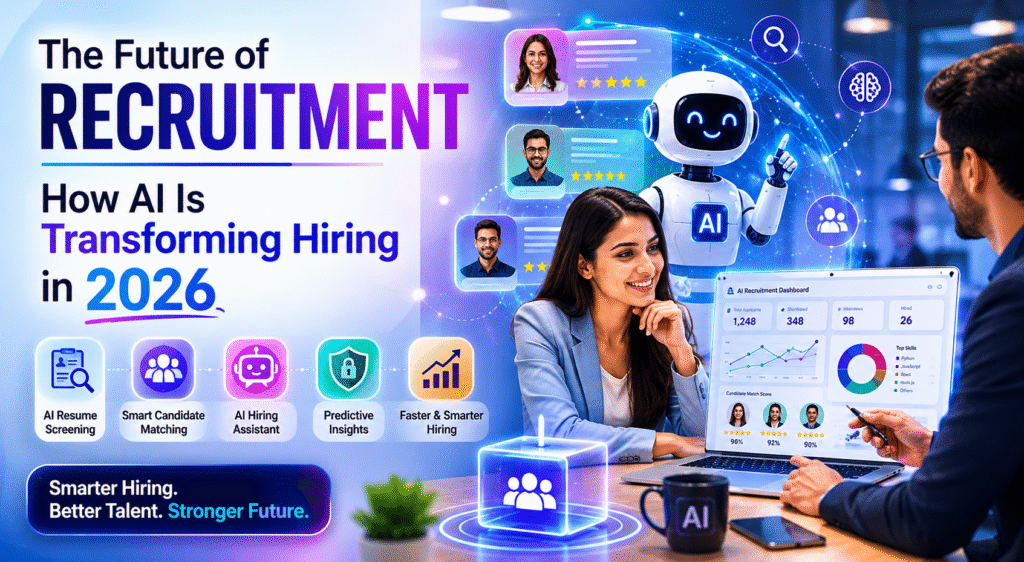
Benefits of AI in Recruitment
Faster Hiring
AI significantly reduces time-to-hire by automating repetitive processes.
Better Candidate Matching
Advanced algorithms improve hiring accuracy and relevance.
Improved Recruiter Productivity
Recruiters can focus on relationship building and strategic hiring instead of administrative tasks.
Enhanced Candidate Experience
AI enables:
- Faster responses
- Personalized recommendations
- Improved communication
Data-Driven Decisions
Organizations can make hiring decisions based on insights rather than assumptions.
Challenges of AI Recruitment
Despite its advantages, AI recruitment also presents challenges.
Algorithm Bias
AI systems must be carefully monitored to avoid unintended bias.
Data Privacy
Candidate information must be protected through responsible data practices.
Human Oversight
AI should support hiring decisions, not replace human judgment entirely.
Successful recruitment will continue to require human empathy, intuition, and relationship-building.
Emerging Recruitment Trends Beyond 2026
The future of recruitment is expected to include:
AI Agents for Hiring
Autonomous systems capable of managing entire recruitment workflows.
Personalized Career Recommendations
AI-driven career guidance based on skills, interests, and market demand.
Skills-Based Hiring
Organizations increasingly prioritizing demonstrated skills over traditional credentials.
Predictive Workforce Planning
Using AI to forecast future talent requirements and skills shortages.
The Role of Technology Companies
Technology companies such as Sarnit Infotech Pvt Ltd are contributing to the development of intelligent platforms that improve recruitment efficiency, career discovery, and workforce management.
As organizations continue embracing AI-driven hiring, innovative platforms and intelligent systems will play a central role in shaping the future of talent acquisition.
Conclusion
The recruitment industry is undergoing a significant transformation.
Artificial Intelligence is enabling:
- Faster hiring
- Smarter candidate matching
- Better recruiter productivity
- Enhanced candidate experiences
While human judgment will remain essential, AI is becoming a powerful partner in the hiring process.
The future of recruitment is not about replacing recruiters—it is about empowering them with intelligent tools and data-driven insights.
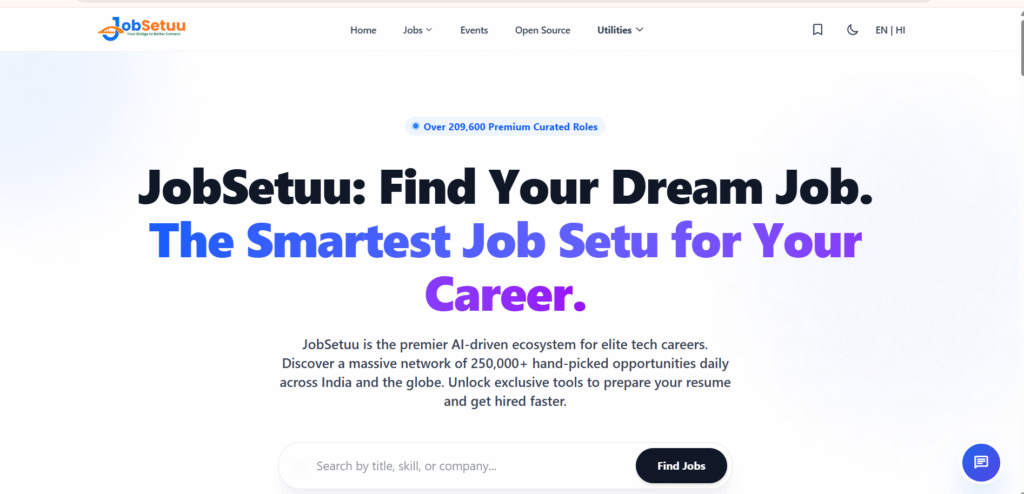
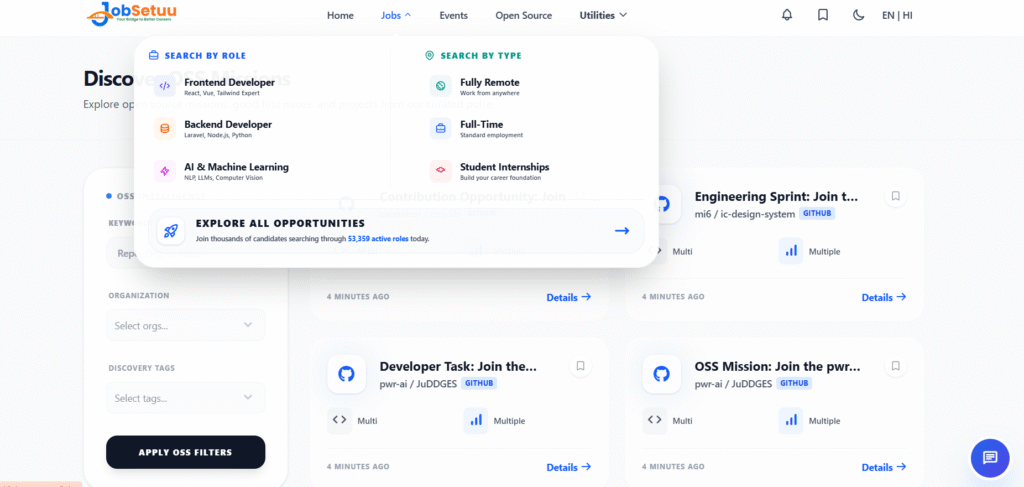
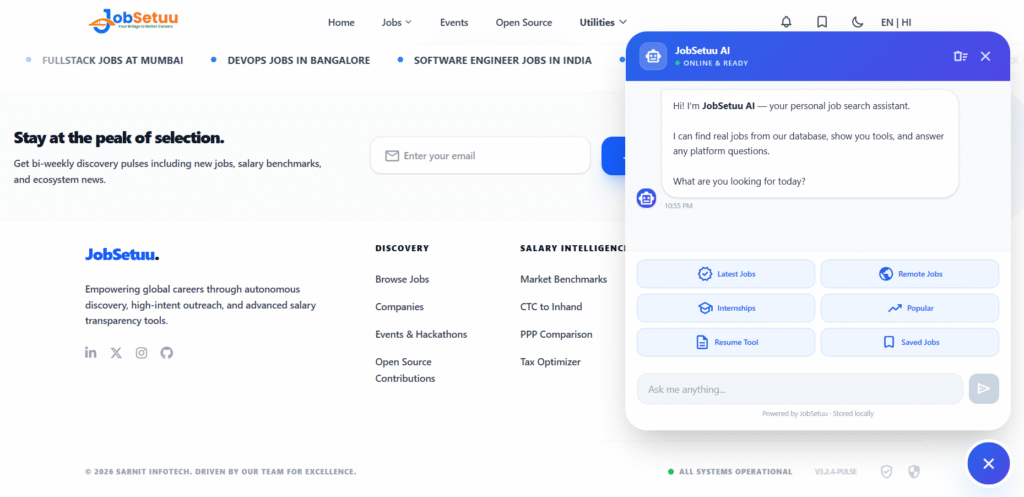
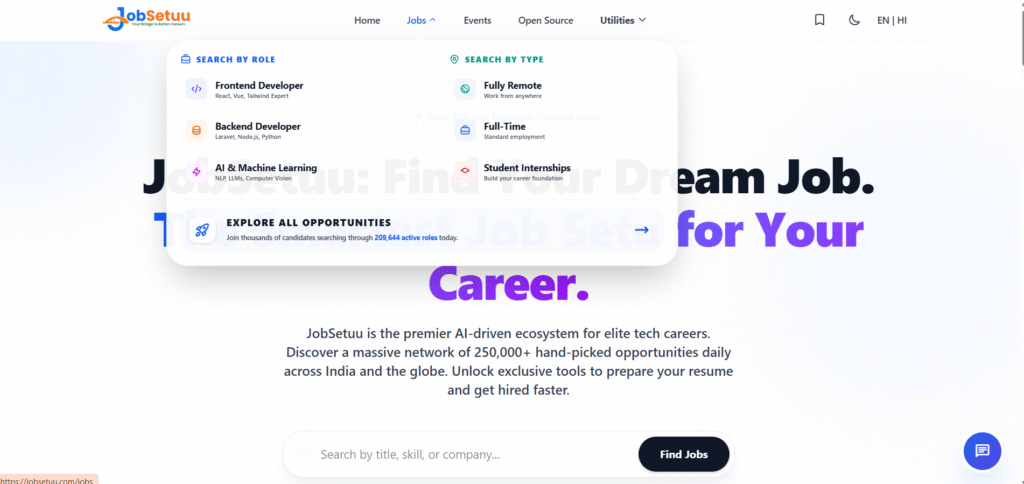
For job seekers, platforms like JobSetuu demonstrate how AI-powered job discovery can simplify career exploration and connect talent with opportunities more effectively than ever before.
As we move further into the AI era, organizations and professionals that embrace these innovations will be best positioned to succeed in the evolving world of work.
Have a question, suggestion, or just want to say hi? We’re here and happy to hear from you!




 WhatsApp
 Email Us
 Call Now