Introduction
In the rapidly evolving digital landscape, software has become a critical driver of business success. Whether it is managing operations, improving customer experience, or enabling data-driven decision-making, organizations today depend heavily on digital tools.
However, one of the most important strategic decisions businesses face is choosing between custom software and Software as a Service (SaaS) solutions.
For Indian businesses—ranging from startups to large enterprises—this decision carries additional complexity due to budget constraints, scalability needs, regulatory considerations, and diverse operational environments.
This article provides a comprehensive comparison of custom software and SaaS, helping businesses make an informed choice based on their specific requirements and long-term goals.
Understanding Custom Software
Custom software refers to applications that are designed, developed, and deployed specifically for a particular organization.
Unlike off-the-shelf solutions, custom software is tailored to match unique workflows, processes, and business objectives. It is typically developed by an in-house team or a technology partner.
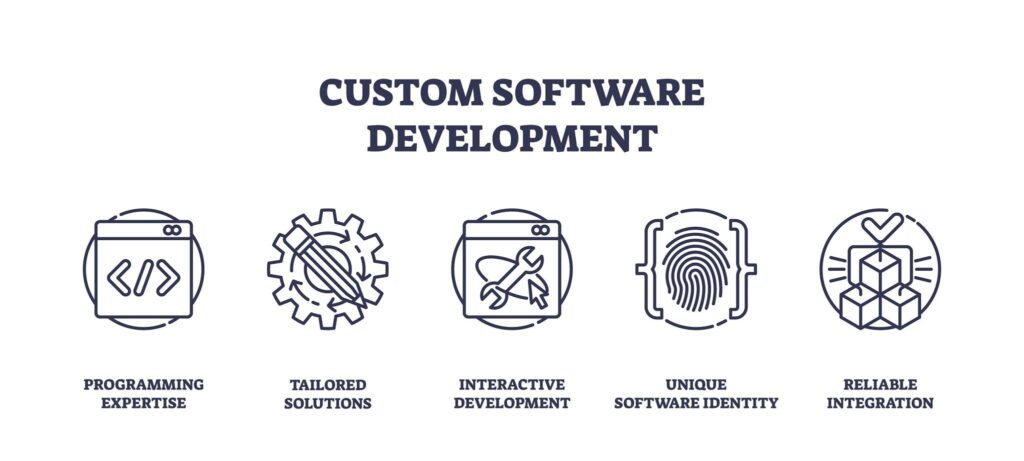
Key Characteristics
- Fully aligned with business requirements
- High level of flexibility and customization
- Ownership and control remain with the organization
- Can be integrated seamlessly with existing systems
Custom software is often seen as a long-term investment that evolves alongside the business.
Understanding SaaS (Software as a Service)
SaaS is a cloud-based software delivery model where applications are hosted by third-party providers and accessed via the internet.
Instead of purchasing software outright, businesses subscribe to these services, paying monthly or annual fees.
Common SaaS Applications
- Customer Relationship Management (CRM) tools
- Accounting and finance software
- Human Resource Management Systems (HRMS)
- Project management platforms
SaaS has gained popularity due to its convenience, accessibility, and low entry cost.
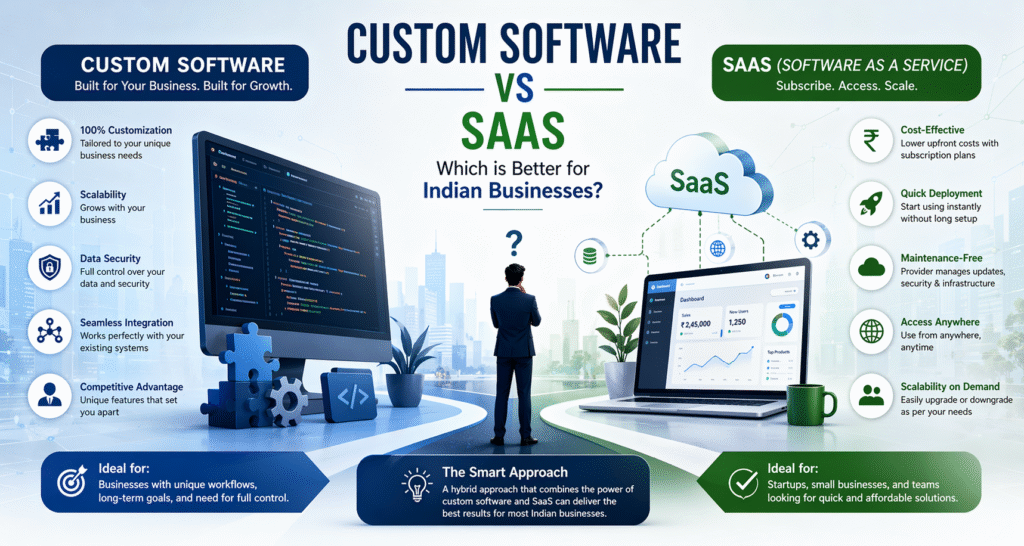
Advantages of Custom Software
1. Perfect Fit for Business Processes
Custom software is built around your specific requirements. This ensures that workflows are optimized rather than adjusted to fit generic tools.
2. High Scalability
As your business grows, custom software can be expanded and modified without restrictions. This makes it suitable for organizations with long-term growth plans.
3. Competitive Advantage
Unique features and tailored functionalities can provide a significant edge over competitors using standard solutions.
4. Data Ownership and Security
With custom software, businesses retain full control over their data, which is particularly important for industries handling sensitive information such as finance, healthcare, and government services.
5. Seamless Integration
Custom solutions can be integrated with existing systems, reducing operational silos and improving efficiency.
Limitations of Custom Software
1. High Initial Investment
Developing software from scratch requires significant upfront cost, which may not be feasible for all businesses.
2. Longer Development Cycle
Custom solutions take time to design, develop, test, and deploy.
3. Ongoing Maintenance
Businesses are responsible for updates, security patches, and system performance.
Advantages of SaaS
1. Cost-Effective Entry
SaaS solutions operate on a subscription model, eliminating the need for large upfront investments.
2. Quick Implementation
Most SaaS tools can be deployed immediately, allowing businesses to start operations without delay.
3. Maintenance and Updates
Service providers handle maintenance, updates, and infrastructure, reducing the burden on internal teams.
4. Accessibility and Mobility
SaaS applications can be accessed from anywhere with an internet connection, enabling remote work and collaboration.
5. Scalability on Demand
Users can upgrade or downgrade plans based on business needs.
Limitations of SaaS
1. Limited Customization
SaaS platforms are designed for mass usage, which means customization options are often restricted.
2. Recurring Costs
While initial costs are low, long-term subscription fees can exceed the cost of custom development.
3. Data Security Concerns
Data is stored on third-party servers, which may raise compliance and privacy concerns.
4. Vendor Dependency
Businesses become dependent on service providers, making it difficult to switch platforms.
Comparative Analysis
| Aspect | Custom Software | SaaS |
|---|
| Cost | High upfront | Low upfront, recurring |
| Customization | Full | Limited |
| Deployment Time | Longer | Immediate |
| Scalability | Highly flexible | Plan-based |
| Maintenance | Self-managed | Provider-managed |
| Data Control | Complete | Limited |
| Integration | Highly flexible | Restricted |
What Works Best for Indian Businesses?
The Indian business ecosystem is highly diverse, and the choice between custom software and SaaS depends on multiple factors.
Startups and Small Businesses
For startups, SaaS solutions are often the preferred choice due to:
- Limited budgets
- Need for quick deployment
- Minimal technical complexity
Mid-Sized Businesses
Growing companies often adopt a hybrid approach, combining SaaS tools for standard operations and custom solutions for core business functions.
Large Enterprises
Enterprises with complex workflows and high data sensitivity typically prefer custom software due to:
- Greater flexibility
- Enhanced security
- Long-term cost efficiency




 WhatsApp
 Email Us
 Call Now